
CHINA, October 23, 2026 — Agri-king presents its 2025 annual industry operating and supply chain review, covering agricultural raw material availability, frozen fruit and vegetable exports, prepared frozen food trade, international market conditions, and supply chain requirements relevant to business-to-business procurement.
Based on published statistics from China's National Bureau of Statistics, international merchandise trade databases and the Food and Agriculture Organization of the United Nations (FAO), China's agricultural production and food processing industries maintained overall growth in 2025. However, the performance of individual frozen food export categories varied in terms of shipment volume, export value and market demand.
The review focuses on the operating environment for frozen vegetable suppliers, frozen fruit exporters, prepared frozen food manufacturers, food distributors, importers and industrial food processors. National and industry statistics are presented separately from company-specific operating information.
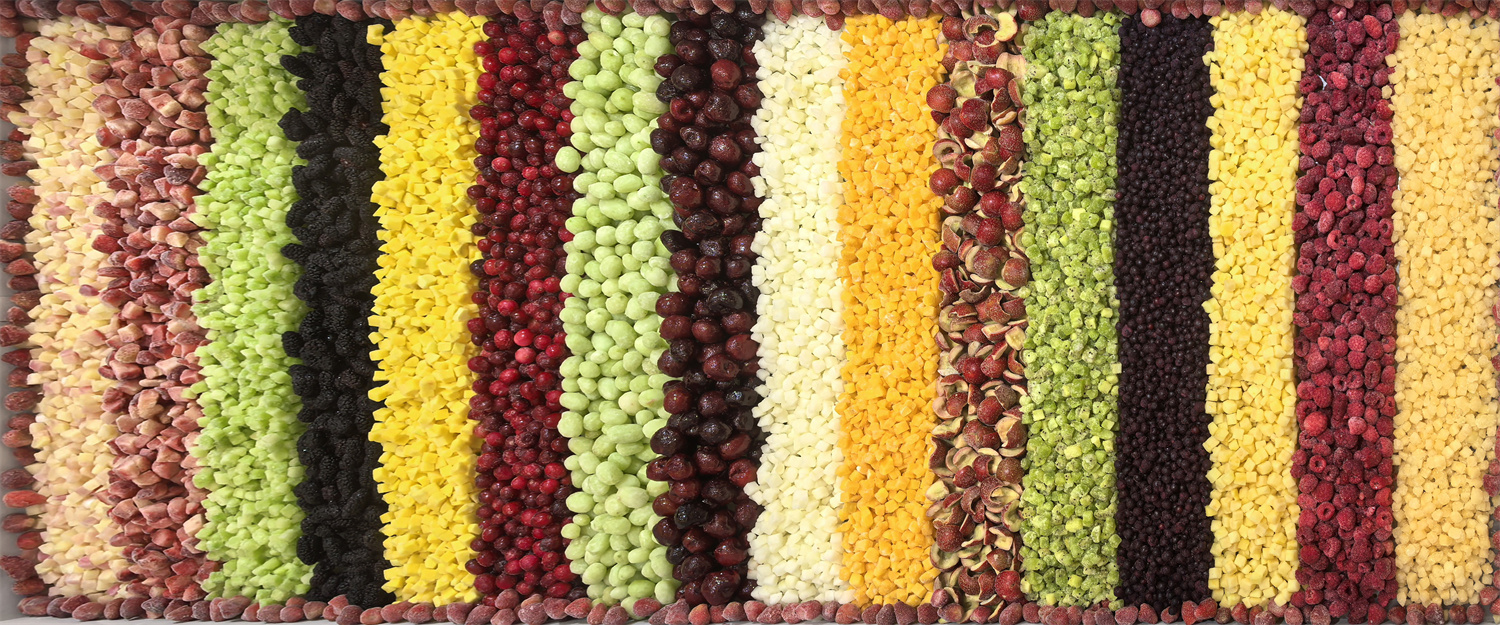
I. Overall Agricultural and Food Processing Performance
According to the National Bureau of Statistics of China, the country's gross domestic product reached RMB 140.19 trillion in 2025, representing year-on-year growth of 5.0%.
The value added of the primary industry increased by 3.9%, while the value added of manufacturing increased by 6.4%. Among industrial enterprises above the designated size, the value added of agricultural and sideline food processing increased by 5.6% compared with 2024.
Agricultural raw material production also remained substantial.
Separate official statistics released in June 2026 indicated that China's total vegetable production, including edible fungi, reached approximately 890 million metric tons in 2025, an increase of 18.6% compared with 2020.
Production of orchard fruits and melons reached approximately 350 million metric tons, up 23.4% from 2020.
These figures demonstrate the scale of China's agricultural production system. Nevertheless, total agricultural output should not be interpreted as the volume available for frozen food processing.
The proportion suitable for industrial freezing depends on crop varieties, seasonal conditions, processing-grade yields, quality specifications, procurement arrangements and available processing capacity.
For international buyers, national production scale provides a useful indication of the broader sourcing environment, but individual supply contracts still require verification of processing availability, specifications and delivery arrangements.
II. Frozen Vegetable Export Performance
China's frozen vegetable export performance showed different trends across product classifications in 2025.
According to trade statistics published through the World Integrated Trade Solution (WITS) database, China's exports under HS 071080, covering frozen vegetables not elsewhere specified within the classification, reached approximately 1.009 million metric tons in 2025.
The corresponding export value was approximately USD 1.045 billion.
Compared with 2024, export volume increased by approximately 1.1%, while export value declined by approximately 2.3%.
The difference between volume growth and value decline indicates a reduction of approximately 3.4% in average reported export value per unit of weight for this classification.
This calculation reflects aggregate customs data and should not be treated as a uniform selling-price reduction for every frozen vegetable product.
China's exports of frozen vegetable mixtures under HS 071090 followed a different pattern.
Export volume reached approximately 96,919 metric tons in 2025, an increase of 28.9% compared with 2024. Export value reached approximately USD 92.7 million, representing growth of 20.8%.
Although both indicators increased, the faster growth in shipment volume suggests a decline in average export unit value for this category.
These differences are relevant to bulk frozen vegetable importers and industrial buyers evaluating annual contract prices.
For procurement purposes, export statistics should be assessed alongside product type, cutting specifications, packaging format, quality grade, production season and destination market.
III. Frozen Fruit Production and International Trade
China's frozen fruit exports also recorded growth within selected customs classifications during 2025.
Under HS 081190, covering certain other frozen fruits and nuts, Chinese exports reached approximately 98,569 metric tons, with a total reported export value of USD 173.0 million.
Compared with 2024, export volume increased by approximately 26.4%, while export value rose by approximately 35.0%.
The corresponding average export unit value increased by approximately 6.8%.
This category does not represent China's entire frozen fruit export industry, and its performance cannot be attributed to a single fruit variety.
For companies sourcing bulk frozen fruit, the data indicate growth in this particular export classification. They do not establish that every producing region experienced higher output or that all frozen fruit products became more expensive.
Harvest timing, maturity, processing yield, fruit size, soluble solids content and product presentation remain important factors in determining commercial suitability.
Products intended for beverage manufacturing, bakery processing, foodservice distribution and industrial ingredient applications may also require different specifications.
For individually quick-frozen fruit, fruit puree and other frozen fruit ingredients, buyers should confirm the applicable processing method, ingredient composition, quality parameters and storage requirements before placing commercial orders.
IV. Prepared Frozen Foods and Value-Added Processing
Prepared frozen foods constitute a separate procurement segment from minimally processed frozen fruit and vegetables.
Products in this market may undergo cutting, seasoning, mixing, cooking, coating or other processing operations before freezing, depending on the formulation.
However, prepared foods do not fall under one universal customs classification. Classification depends on the product's ingredients and degree of processing.
For the narrower HS 200490 category, covering certain frozen prepared or preserved vegetables and vegetable mixtures other than potatoes, Chinese exports reached approximately 145,310 metric tons in 2025.
The corresponding export value was approximately USD 343.3 million.
Both indicators declined compared with 2024.
Export volume decreased by approximately 3.9%, while export value fell by approximately 3.4%.
This decline should be reported separately from the growth recorded in certain minimally processed frozen vegetable and fruit categories.
It would be inaccurate to conclude from this single classification that all Chinese prepared frozen food exports contracted during 2025.
Nevertheless, the data demonstrate that different frozen food product categories did not experience uniform expansion.
For business buyers, the distinction matters when comparing frozen vegetables for further manufacturing with ready-to-cook, partially cooked or other value-added frozen food products.
Prepared food sourcing generally requires additional attention to recipes, ingredient composition, allergen information, cooking instructions, microbiological requirements and packaging specifications.
Production capacity for one category should not automatically be considered interchangeable with capacity for another.
V. Export Markets and International Demand
China's total merchandise imports and exports reached approximately RMB 45.47 trillion in 2025, representing an increase of 3.8% over the previous year.
Merchandise exports increased by 6.1%, while imports increased by 0.5%.
These figures cover all merchandise trade rather than the frozen food industry alone.
At the product level, geographical concentration remained evident in certain frozen vegetable export categories.
For HS 071080, Japan and the Republic of Korea together accounted for approximately 60% of China's reported export volume in 2025.
The United States, Italy and the United Kingdom were also among the principal destinations for this classification.
For HS 200490, Japan accounted for approximately 79% of China's reported export volume, indicating a relatively concentrated destination structure.
Such concentration can affect supplier planning because variations in purchasing requirements, regulatory conditions or market demand in major importing countries may influence production scheduling and export allocation.
For overseas buyers, these trade patterns reinforce the importance of confirming product availability for the intended destination rather than relying on national export totals alone.
VI. Raw Material Prices and Procurement Conditions
International food commodity prices remained subject to variation during the reporting period.
According to the FAO, the Food Price Index averaged 127.2 points in 2025, approximately 4.3% higher than its 2024 average.
The increase was mainly associated with higher international vegetable oil and dairy prices, which outweighed declines in cereal and sugar quotations.
The index does not directly measure frozen fruit, frozen vegetable or prepared frozen food prices.
Accordingly, it should be regarded as a general food commodity indicator rather than a benchmark for individual frozen product quotations.
For frozen fruit and vegetable sourcing, procurement costs can vary according to crop availability, grade requirements, labour costs, freezing operations, packaging materials, energy consumption, inland transportation and refrigerated logistics.
Seasonal production also creates timing differences between raw material harvesting and finished product distribution.
Although freezing allows certain agricultural products to be marketed beyond their immediate harvest season, it does not eliminate the effect of raw material shortages or quality variations at the time of processing.
Purchasers should therefore distinguish between confirmed finished-goods inventory, production scheduled against contracted raw materials and prospective supply dependent on future harvests.
VII. Cold Chain Management and Quality Documentation
Frozen food supply chains require coordination among raw material collection, processing, packaging, refrigerated storage, domestic transportation and international shipment.
For products covered by the European Union's quick-frozen food rules, Directive 89/108/EEC establishes a general product temperature requirement of minus 18 degrees Celsius or lower, subject to specified permitted deviations in certain distribution circumstances.
Temperature management remains a material consideration when evaluating international frozen food shipments.
For United States imports, the Food and Drug Administration's Foreign Supplier Verification Programs establish risk-based verification responsibilities for covered importers, subject to applicable exemptions.
Requirements vary by product and destination.
In commercial supplier evaluations, relevant documentation may include product specifications, ingredient declarations, lot identification, test reports, production records, temperature records and applicable regulatory documents.
The actual documentation available must be verified for the specific product, manufacturer and shipment.
Supplier approval should not be based solely on product photographs, stated production capacity or general descriptions of quality control procedures.
For long-term contracts, it is also useful to establish agreed procedures for deviations, corrective actions, replacement shipments and specification changes.
These measures support traceability and clearer allocation of responsibilities between manufacturers, exporters, importers and downstream distributors.
VIII. Supply Chain Risks and Operational Constraints
Despite the overall expansion of agricultural production and selected frozen food export categories, several operating constraints remain relevant.
First, product-level supply conditions differ from national agricultural production trends. Growth in total vegetable or fruit output does not guarantee adequate processing-grade raw material availability for every crop.
Second, export volume and export value may move in opposite directions. This was observed in the HS 071080 frozen vegetable category during 2025.
Third, not all processed frozen food categories recorded growth. The decline in HS 200490 export volume provides an example of weaker performance in a specific value-added product classification.
Fourth, agricultural production is seasonal. Weather conditions, harvesting schedules and crop-grade yields can affect processing availability.
Fifth, international logistics remain dependent on refrigerated equipment availability, shipment scheduling and destination-specific import procedures.
These risks should be addressed through product-level procurement planning rather than broad assumptions about the reliability of an entire national supply base.
Where agricultural production or raw material procurement declines for a specific product, the reduction should be disclosed using verified crop, regional or supplier records. No unverified company-level or regional production decline is attributed to Agriking in this review.
IX. Procurement Priorities and Business Outlook
For Agriking's frozen fruit, frozen vegetable and prepared food business segments, the published industry data provide a basis for evaluating market conditions and discussing supply requirements with international buyers.
The 2025 results indicate that procurement planning should distinguish between aggregate agricultural availability, export performance and the production conditions of individual suppliers.
For 2026 sourcing programmes, key areas of attention include product-specific availability, crop calendars, processing specifications, contract volumes, packaging formats, destination-market compliance and refrigerated transportation arrangements.
Buyers evaluating suppliers for recurring orders should place particular emphasis on documented production arrangements and the ability to maintain agreed specifications across multiple shipments.
Bulk procurement decisions should also take account of raw material seasonality, confirmed production schedules and changes in commercial conditions between quotation and shipment.
For prepared frozen foods, additional attention may be required for formulation consistency, allergen declarations, cooking characteristics and destination-specific labelling requirements.
Agriking's company-specific production volumes, export revenue, order fulfilment rates and manufacturing capacity are not inferred from national or international statistical datasets. Such indicators require separate company records and independent verification where applicable.
X. Conclusion
China maintained a substantial agricultural production base and continued growth in agricultural and sideline food processing during 2025.
Nevertheless, frozen food export performance was mixed.
Certain frozen vegetable and frozen fruit classifications recorded increased shipment volumes, while other categories experienced declining export value or reduced export quantities.
For international food importers, distributors and industrial processors, these results underline the need for category-specific sourcing analysis and transparent supplier evaluation.
The reliability of a frozen food supply arrangement depends not only on national production scale but also on verified product availability, consistent specifications, traceability, cold chain management and commercially realistic delivery planning.
Agriking's annual review is intended to provide an evidence-based reference for procurement discussions involving frozen fruits, frozen vegetables and prepared frozen foods.
Business customers planning annual or seasonal procurement may submit their product specifications, estimated purchase volumes, destination markets and documentation requirements for a product-specific supply feasibility assessment.
 EN
 AR
 BG
 FR
 EL
 JA
 KO
 PT
 RO
 RU
 ES
 TL
 ID
 LV
 LT
 SR
 UK
 VI
 TH
 TR
 FA
 MS
 SW
 BE
 AZ
 KA
 UR
 BN
 KM
 LO
 MN
 NE
 SO
 MY
 KK
 TG
 UZ
 AM
 KU
 PS