-
What are the stated monthly and annual production capacities?
The supplied company information states an approximate monthly production capacity of 3,333 metric tons and an annual production capacity of 40,000 metric tons. Availability for an individual product depends on the production schedule, raw materials and order specifications.
-
What does IQF mean, and how are IQF fruits and vegetables produced?
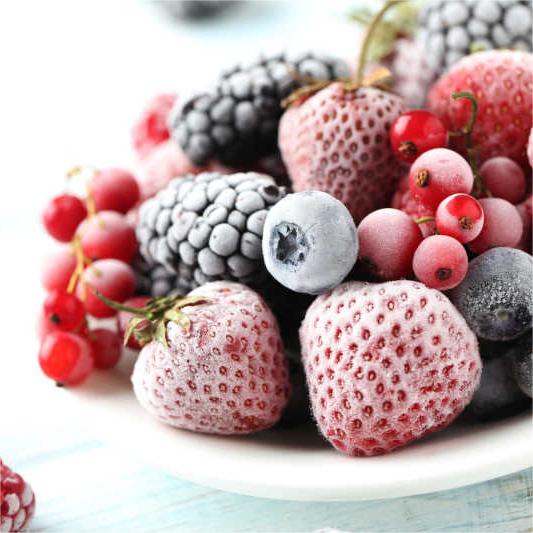
IQF means Individual Quick Freezing. Prepared fruits or vegetables are washed, sorted and cut when necessary, then frozen rapidly as separate pieces rather than as one solid block. The pieces are packed and kept in frozen storage. This produces loose, free-flowing ingredients that can be portioned and used in food processing or cooking.
-
Why do buyers choose IQF fruits and vegetables?
Rapid individual freezing helps retain colour, flavour, texture and nutritional quality. Faster heat removal generally forms smaller ice crystals than slow freezing, reducing damage to plant cells. Separate pieces support more accurate portion control, consistent recipe preparation and reduced pre-cooking work. IQF can be particularly useful for long-distance supply, food factories, catering and frozen retail packs.
-
Why must repeated thawing and refreezing be avoided?
Temperature fluctuations and repeated thawing may cause moisture loss, clumping, a softer texture and faster quality deterioration. Maintain stable frozen storage and do not refreeze goods that have thawed without an appropriate food-safety assessment. If a cold-chain interruption is suspected, isolate the affected lot and follow the quality investigation procedure.
-
What is the difference between IQF and BQF products?
IQF products are frozen as separate pieces for easy handling and portion control. BQF, or block quick-frozen, products are supplied in blocks. IQF is generally suitable when consistent individual pieces are required, while BQF may be considered for high-volume industrial processing where separation into individual pieces is unnecessary and cost control is a priority. Confirm the required format before ordering.
-
How are frozen, fresh and dehydrated fruits and vegetables different?
IQF products are suitable for standardized food manufacturing, ready meals, catering and long-distance refrigerated distribution. Dehydrated products suit dry mixes, instant foods and ambient storage where low transport weight is important. Fresh produce is often preferred for salads, immediate consumption and premium fresh presentation. The best choice depends on texture, intended use, shelf life, preparation labour, cold-chain availability, logistics and total usable cost; there is no universal ranking for every buyer.
-
How does IQF frozen broccoli compare with fresh broccoli?
IQF broccoli is prewashed, trimmed, cut and frozen for ready-to-cook use. The source gives a typical frozen shelf life of 18 to 24 months at -18°C or below and a near-100% on-site preparation yield. Fresh broccoli can provide a firmer texture and fresh appearance but requires more preparation. The source cites approximately 14 days at 5°C for fresh broccoli and estimates that 1 kilogram of untrimmed broccoli yields around 0.81 kilogram of ready-to-cook broccoli, or about 19% trimming loss. For an equivalent 1 kilogram of usable broccoli, that is approximately 1.23 kilograms of whole untrimmed broccoli before labour and disposal costs. Actual yields and storage life vary with quality and handling.
-
When is frozen broccoli more practical than fresh broccoli?
Frozen broccoli is generally more practical for standardized recipes, year-round supply planning, institutional kitchens, ready meals and long-distance shipments. It reduces washing, cutting and trimming at the point of use and can reduce preparation waste. However, it requires continuous frozen storage and more refrigeration energy than chilled fresh broccoli. Fresh broccoli remains suitable for local retail, salads, lightly cooked dishes and short supply chains, but requires faster stock rotation and monitoring for water loss, yellowing and spoilage.
-
How do IQF frozen diced carrots compare with dehydrated diced carrots?
IQF diced carrots retain water, visible pieces and a ready-to-cook texture. The source gives approximately 88% moisture and a typical frozen shelf life of 18 to 24 months at -18°C or below. Dehydrated diced carrots contain approximately 4% to 8% moisture and typically have a 12-to-24-month shelf life when kept cool and dry. The source estimates that 1 kilogram of dehydrated carrot contains about the same dry solids as 8 kilograms of raw carrots, before processing losses. These are approximate composition comparisons, not guaranteed specifications for every lot.
-
Which applications and cost factors favour frozen or dehydrated diced carrots?
IQF diced carrots are generally suitable for mixed vegetables, ready meals, soups, fried rice, catering and dishes where natural-looking pieces remain visible. Dehydrated carrots suit instant noodles, dry soups, seasonings, snacks and foods stored without refrigeration. IQF requires refrigerated transport and storage; dehydrated products require moisture-proof packaging, dry conditions and sometimes rehydration. Drying uses substantial energy during production, but ambient distribution can reduce ongoing refrigeration needs. The source estimates an approximately 85% to 90% reduction in shipping weight for equivalent carrot solids after dehydration.
-
What quality controls are described for the supplied products?
The company profile describes inspection for every batch. The listed controls include raw material inspection, production-process checks, visual checks, size and weight verification, temperature monitoring, metal detection or X-ray inspection, finished-product sampling and laboratory testing according to customer and destination-market requirements. Buyers should confirm which test reports and inspection records apply to their specific product and lot.
-
Which specifications should be provided when requesting a quotation?
Specify the product variety and grade, origin, crop year, cut shape and dimensions, size tolerance, IQF or BQF format, colour, flavour, permitted defect rate and any relevant proportions such as stem-to-leaf ratio. Also provide additive requirements, microbiological and pesticide limits, net weight, packaging format, shelf life, destination market, order volume, delivery schedule and any special labelling or testing needs.
-
How should a buyer evaluate a frozen fruit or vegetable supplier?
Assess the supplier’s food-safety systems, production capacity, traceability arrangements, testing capability, export experience and delivery reliability. Compare the written specification and approved sample, not price alone. Also review packaging, usable yield, intended application, storage conditions, documentation, total landed cost and ability to meet the agreed schedule.
-
How should goods be checked before commercial acceptance?
Use the approved specification and sample as the basis for inspection. Confirm product type and variety, cut size, appearance, defects, net weight, packaging integrity, lot identity, certificates or certificate of analysis where agreed, and actual temperature on receipt. Buyers should also review shipment documents and record any discrepancy promptly.
-
Which European Union requirements apply to IQF fruit and vegetable imports?
There is no single EU certificate that covers every frozen fruit or vegetable product. The source identifies requirements relating to food hygiene, traceability, pesticide maximum residue limits, contaminants, relevant microbiological criteria, frozen-food handling and labelling. Relevant measures listed in the source include Regulations (EC) No 178/2002, 852/2004, 396/2005 and 2073/2005; Regulations (EU) 2023/915, 1169/2011 and 2017/625; and Directive 89/108/EEC. Regulation (EU) 2019/1793 can impose additional controls on specified higher-risk imports. Applicability must be checked for the product, origin and destination.
-
Are HACCP, BRCGS, IFS and ISO 22000 all mandatory for EU imports?
The source distinguishes mandatory EU food-law compliance and HACCP-based hygiene controls from buyer-requested certification. BRCGS, IFS and ISO 22000 are not universal import certificates required for every frozen fruit and vegetable consignment. A particular customer may nevertheless require one or more of these standards as part of supplier approval.
-
What documents and labelling details may be required for EU-bound shipments?
Common commercial and quality documents listed in the source include the product specification, certificate of analysis (COA), relevant laboratory reports, batch traceability records, commercial invoice, packing list, transport document and origin documents. Labels must contain the mandatory information in an accepted market language, as applicable. Official certificates or a Common Health Entry Document for Products of Non-Animal Origin (CHED-D) apply only where the relevant rules require them. Requirements can vary across EU destination countries, and EEA markets should be checked separately.
-
What are the main procurement and supply-chain risks?
Key risks include unclear specifications, inconsistent cut size or variety, temperature abuse, packaging damage, foreign-matter or microbial contamination, shipment delays and missing or incorrect import documents. They can arise during raw material sourcing, processing, storage, loading, refrigerated transportation, customs clearance or use. To reduce risk, approve samples, verify the supplier, agree specifications and test requirements in writing, inspect packaging and temperatures, and confirm documents before shipment.
-
What should buyers confirm about storage, logistics and delivery arrangements?
Confirm the required -18°C-or-below frozen condition, packaging and loading method, container or shipment type, order quantity, delivery window, destination import documents and acceptance criteria. Keep temperature and transport records where applicable. For mixed-container orders, confirm the quantity and identification of each product. Lead time and loading quantity should be agreed for the actual order rather than assumed from general product information.

 EN
 AR
 BG
 FR
 EL
 JA
 KO
 PT
 RO
 RU
 ES
 TL
 ID
 LV
 LT
 SR
 UK
 VI
 TH
 TR
 FA
 MS
 SW
 BE
 AZ
 KA
 UR
 BN
 KM
 LO
 MN
 NE
 SO
 MY
 KK
 TG
 UZ
 AM
 KU
 PS